
Car charger installation cost in Ireland
A 7 kW smart car charger costs €1,000 to €1,500 fitted in Ireland, including VAT, with a standard fit of up to 5 metres of cable. The SEAI grant takes €300 off, so a standard fit comes to €700 to €1,200. A longer cable run, a trench to a garage or post, and work on an older fuse board come on top.
Our price guide line by line, three houses priced, and what the grant does and doesn't cover.
Free, no obligation. One registered electrician prices it, not five.
- €1,000–€1,5007 kW smart charger, standard fit, incl. VAT
- €300SEAI grant off the charger and fitting
- €1,400–€2,100solar-aware charger, fitted
- €500–€650full board upgrade in a house older than 1990
Three houses, priced
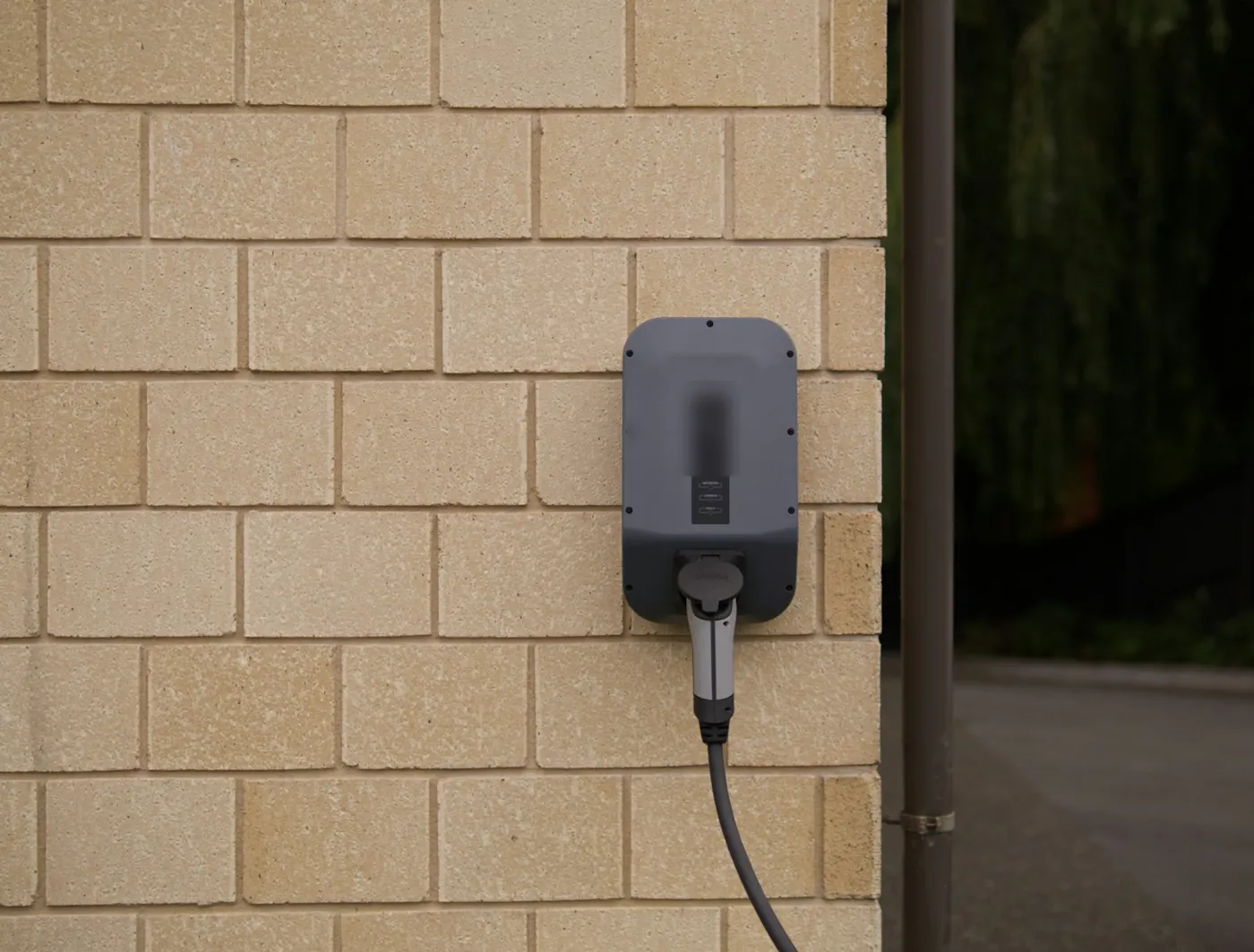
- A semi-detached house, charger on the wall beside the driveway, 3 metres from a board fitted in 2015: €1,000 to €1,500 fitted, €700 to €1,200 after the grant. 2 to 4 hours on site.
- A 1980s house, charger in the attached garage, 10 metres from the original fuse board: €1,550 to €2,350 fitted, €1,250 to €2,050 after the grant. A full day on site.
- A detached house with solar panels, charger on a detached garage 20 metres away, a 2000s board: €1,800 to €3,550 fitted, €1,500 to €3,250 after the grant. A full day on site.
The planner below does the same sum for your house in under a minute.
Match a charger to your car and your house
Four quick taps. Your plan builds up as you go: the charger that suits your car, the price range for your house, the grant and the time on site. Your number is only asked for at the end, if you want a fixed price.
A fully electric car, a charger on the house wall a few metres from a newer fuse board: €1,000 to €1,500 fitted, €700 to €1,200 after the €300 SEAI grant, including VAT.
How this is worked out
We start from what a 7 kW smart charger costs fitted in Ireland, including VAT, with a standard fit: the charger, its own circuit from the fuse board and up to 5 metres of cable. A solar-aware charger costs more. Then we add what installers charge for a longer cable run, a trench to a garage or post, and fuse board work on an older board. The SEAI home charger grant comes off the charger and fitting, never off the board or earthing work. It is an estimate to plan with, never a quote: the electrician prices your house after looking at it.
What a standard fit includes
A standard fit is the charger on an outside wall or in the garage, close to where the car parks, with its own circuit from the fuse board: the cable, the protective device at the board, and up to 5 metres of cable run on the surface of the wall. The electrician tests the circuit, sets the charger up, and fills in the paperwork the SEAI grant needs. It's what the €1,000 to €1,500 covers.
What pushes the price up
- Distance. Every metre past the first five costs more cable and more time, and a long run needs a thicker cable.
- Digging. A charger on a detached garage or a post needs the cable buried: €200 to €550, more under tarmac or paving than under grass.
- An older board. A board from before about 2008 often needs work first. A house older than 1990 that never had its board replaced: €500 to €650 for new meter tails, an earth bond and a new board.
- The supply. If the house can't carry 7 kW more with everything else on, a load balancing device (about €180) turns the charger down instead of tripping the main fuse.
What the grant covers
The SEAI home charger grant pays 100% of the charger and installation cost, up to €300, against the invoices for both. Upgrades such as earthing, meter tails or bonding are not eligible, so they're always yours to pay. Because a standard fit costs more than €300, the grant always comes to the full €300 on a normal job. SEAI sets the rules; the electrician you use doesn't change them.
The order matters more than the amount: six ways people lose the grant.
Getting a fixed price
- Take two photos: the fuse board with its cover closed, and the spot where the car parks.
- Measure the route. Walk the way a cable would go from the board to that spot, along the walls.
- Ask for a written price that lists the charger, the fit, any cable over 5 metres, digging, board work and VAT as separate lines.
- Apply for the grant before you agree a date, and only book once the Letter of Offer arrives.
Home Car Charger Installation guides & price breakdowns
Straight answers to what people ask most: itemised costs, specifications, planning or grants, and what to check before you book.
More guides & resources: The certificate and paperwork for a home charger · All guides & calculator hub · Technical & trade glossary · Frequently asked questions
Questions people ask
How much is a home car charger in Ireland?
A 7 kW smart car charger costs €1,000 to €1,500 fitted in Ireland, including VAT, with a standard fit of up to 5 metres of cable. The SEAI grant takes €300 off, so a standard fit comes to €700 to €1,200. A longer cable run, a trench to a garage or post, and work on an older fuse board come on top.
How much is a car charger after the grant?
€700 to €1,200 for a 7 kW smart charger with a standard fit, including VAT. Extras like a long cable run or board work come on top, and the grant doesn't reduce them.
Why is my quote higher than the advertised price?
An advertised price usually covers a standard fit: the charger close to the fuse board, with a short cable run on the wall. Distance, digging, an older board and load balancing are priced on top once someone has seen the house.
Is a tethered charger dearer?
Yes, by about €100 to €200 fitted. The cable is fixed to the charger, so you don't carry one in the boot.
Do I need three-phase for a home charger?
No. A 7 kW charger runs on a normal single-phase supply. 11 kW and 22 kW chargers need three-phase, which costs €1,500 to €3,000 or more to bring in, and most cars charge overnight on 7 kW anyway.
Do prices include VAT?
Yes. Every price on this site includes VAT.
Home Car Charger Installation across all 26 counties
Requests from all 26 counties go to one vetted local specialist who covers your county — from Dublin, Cork, Galway and Limerick to Kildare, Meath, Wicklow, Waterford and Donegal. Pick your county below for local prices, specifications and advice.
Get a fixed price for your charger
Match it in under a minute, see the price and the grant, and one Safe Electric registered electrician who covers your county rings you.